
Image of the Week
February 1, 2026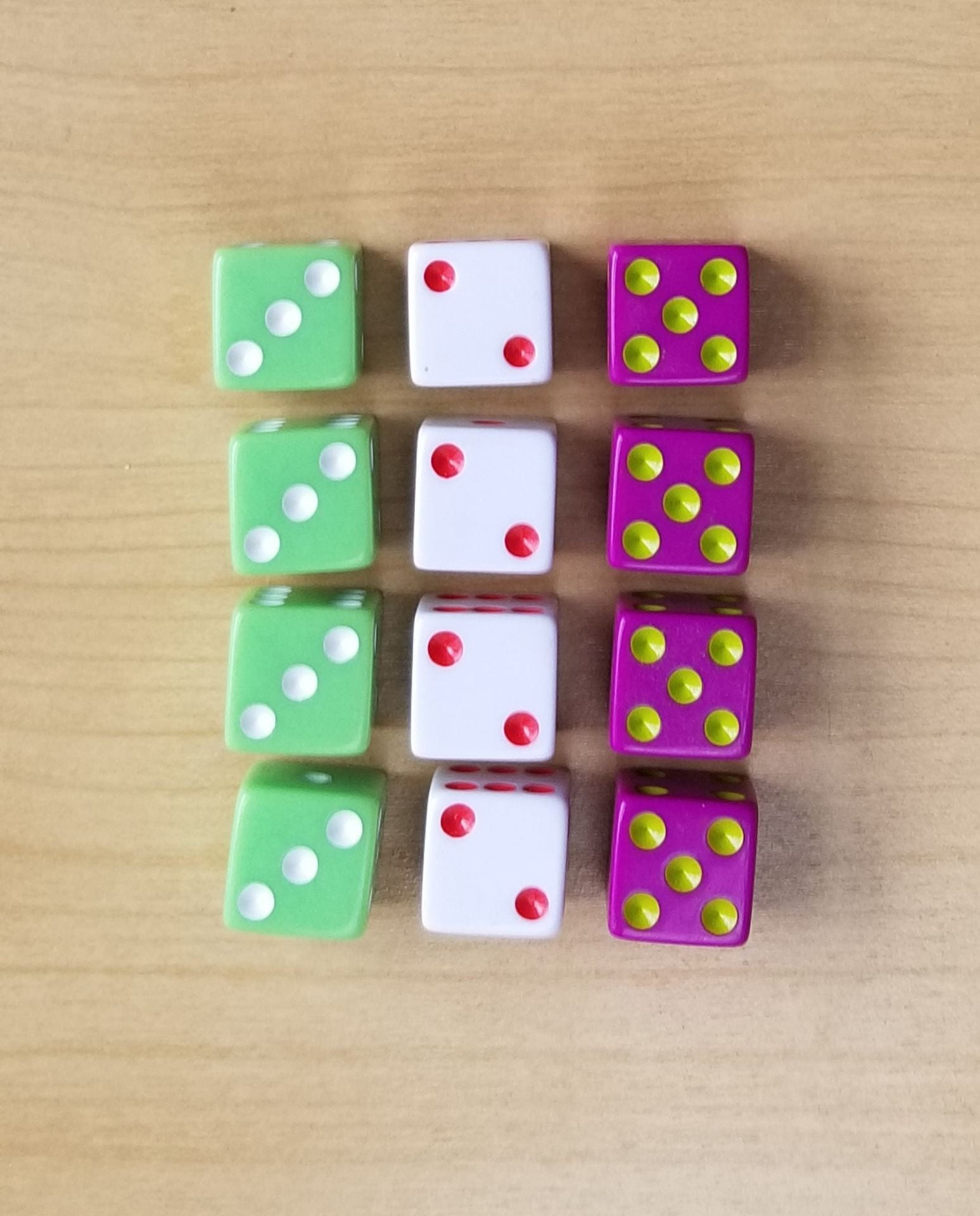
Happy 5th Anniversary!
Before we start this week’s newsletter, we want to pause to celebrate: Today is our 5th anniversary! We – Sarah Larison and I – launched multiplicity lab on February 1, 2021, when we were still in the grip of the pandemic. Our initial goals were terribly modest: we hoped to offer something useful to at least a handful of teachers who were dealing with the demands of remote teaching. But as teachers often do, you all vastly exceeded our expectations. In the last five years, nearly 250,000 teachers have visited multiplicity lab, viewing our pages nearly one million times! We are honored to be in your inbox twice each week and grateful for all the conversations – at conferences, over Zoom, and on Instagram – we’ve had with you over the last five years. This week’s image is one of the first I created – in my kitchen in late November of 2020 as we worked on the design for multiplicity lab. Sunshine streamed through the window even though it was cold, and my youngest child and I composed this array of dice. If you have a favorite multiplicity lab memory, share it with us on Instagram!
Skip Counting and Multiplicative Thinking
Skip counting is a powerful bridge between counting by ones and thinking in equal groups, the beginning of multiplicative thinking. One entry point to skip counting is dice, like those shown in this week’s image. Take a close look and consider the question, How many do you see?
Some students might choose to focus on the unit of the dice, counting them in the array or skip counting the rows (by 3s) or columns (by 4s) of dice. But if students choose to focus on the dots instead, a different dimension of skip counting opens up. Students might:
- Notice how many in a part of the image, like:
- The group of green dice
- A row of dice
- Focus on skip counting only the twos, the threes, or the fives
- Skip count all the threes (12 dots), twos (8 dots), and all the fives (20 dots) and wonder how to join them
- Make fives out of pairs of 3 and 2, and then skip count the image by fives
- Make groups of ten out of a row of 3, 2, and 5, that they can then skip count by tens
And your students may very well invent other ways of using skip counting to figure out an answer to the question, How many do you see? Remember that all of these ways are pathways to multiplicative reasoning, no matter the age of your students. We do not need to call it multiplication to build the very ideas that will ultimately get students to this operation. Indeed, multiplicative thinking is far more powerful than the operation alone. It is a set of big ideas that work flexibly together to answer complex, but structured questions, like the one in this week’s image. Start laying the foundation for multiplicative thinking with your students tomorrow by trying this or any of our other skip counting with dice activities!
To multiplicity, cheers!
Jen Munson and the multiplicity lab group